Article Summary
Cold weather can be a serious trigger for asthma. Cold, dry air can irritate the lungs, while winter housing conditions, higher heating costs, and difficulty getting to care can make asthma harder to manage — especially for Medicaid members in the Hudson Valley.
New York’s Social Care Network (SCN) helps connect Medicaid members with asthma to additional supports that address these challenges. Depending on health needs and eligibility, support may include help with housing-related conditions, heating or utility assistance when appropriate, transportation, food and nutrition supports, and guidance from a social care navigator. These services are available at no cost to Medicaid members and are designed to complement medical care during the colder months.
____________________________________________
Asthma symptoms don’t just flare up during allergy season. Cold weather can be just as challenging, and sometimes more dangerous, for people living with asthma, especially during long Hudson Valley winters.
Cold, dry air can irritate the lungs, while winter housing conditions, and higher heating costs can make asthma harder to manage. For Medicaid members, the Hudson Valley Social Care Network (SCN) offers extra support that helps address these everyday challenges.
How cold temperatures can worsen asthma
During colder months, people with asthma may experience more frequent or severe symptoms. Cold air can cause the airways to tighten, leading to coughing, wheezing, shortness of breath, or chest tightness, even in people whose asthma is usually well controlled.
Winter can also increase exposure to asthma triggers inside the home, including:
- Dust and allergens from closed indoor spaces
- Mold caused by moisture or poor ventilation
- Fumes from heating sources
Spending more time indoors during cold weather can make these triggers harder to avoid.
Winter conditions can create barriers to asthma care
Cold weather doesn’t just affect breathing, it can make daily asthma management more difficult. During winter months, people may face:
- High heating or utility costs that limit safe indoor temperatures
- Housing conditions that worsen indoor air quality
- Increased stress related to housing or financial strain
Together, these challenges can increase the risk of asthma flare-ups and complications.
How the Social Care Network can help
The Social Care Network connects Medicaid members to additional supports that can make managing asthma easier during cold weather.
Asthma can make it hard to breathe. A safe, clean home can help. If you have Medicaid, you may get help at no cost to you. Examples of services that you or your family may be eligible for include:
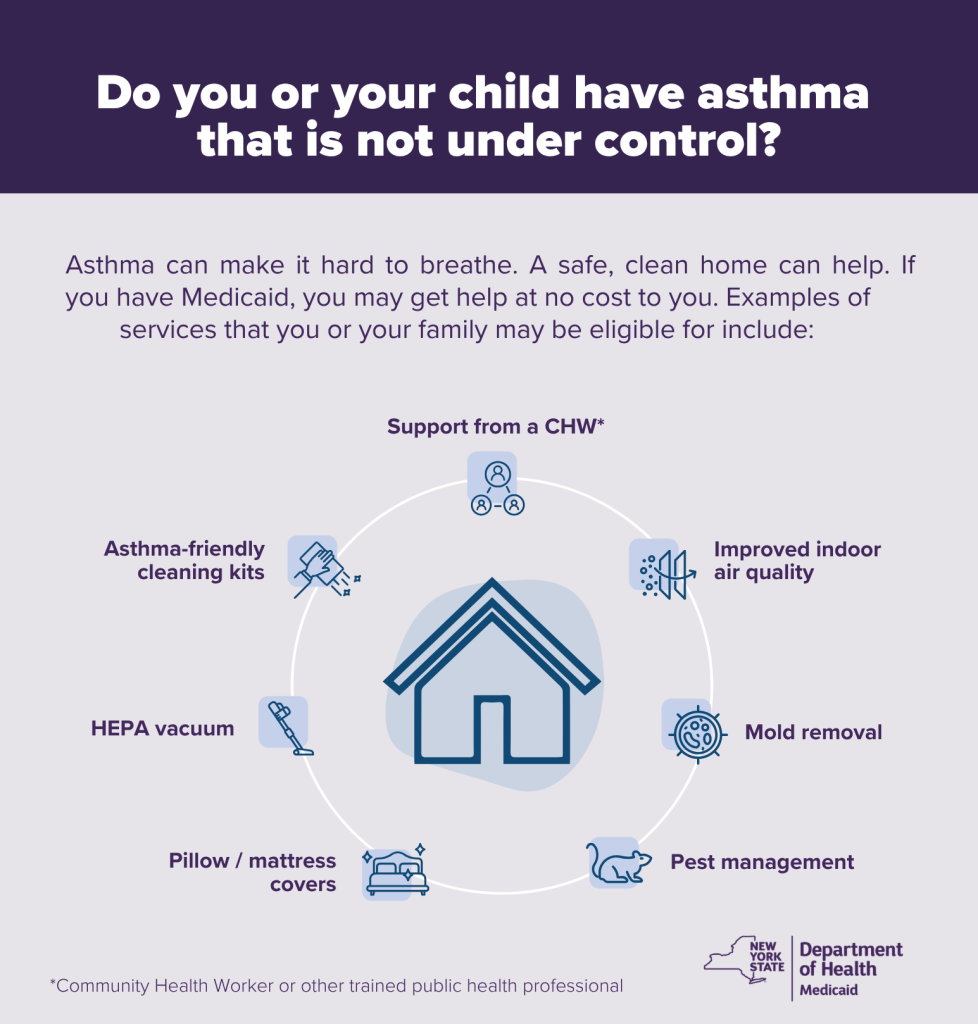
To learn more and to see if you are eligible based on your living situation and health status, connect with your local Social Care Network (SCN)! Get started at https://nyschildrensasthma.org/social-care-networks by clicking on the “Find Services” link for the SCN in your community.
These services are designed to support asthma care alongside medical treatment.
How to access support
Getting started is simple:
- A health care provider, care manager, or community organization completes a brief screening
- If additional support may help, a social care navigator connects you to services in your community
- Services are provided at no cost to Medicaid members
You do not need to know which services you need before being screened.
Help is available across the Hudson Valley
The Social Care Network serves Medicaid members throughout the Hudson Valley, including Westchester, Rockland, Orange, Putnam, Dutchess, Ulster, and Sullivan counties. Available services may vary by location.
If you or someone in your household has asthma and cold weather makes symptoms harder to manage, extra support may be available.
Ask your health care provider, care manager, or local community organization about the Social Care Network, or visit hudsonvalleycare.org to learn more.
Frequently Asked Questions
Why does cold weather make asthma worse?
Cold, dry air can irritate the airways and cause them to tighten, which may lead to coughing, wheezing, shortness of breath, or chest tightness. Winter conditions can also increase exposure to indoor triggers like dust, mold, and poor ventilation.
Can housing conditions affect asthma during winter?
Yes. During colder months, people spend more time indoors, and issues like mold, moisture, pests, or poor air quality can worsen asthma symptoms over time.
Does Medicaid offer extra support for people with asthma in cold weather?
Depending on health needs and eligibility, Medicaid members with asthma may be connected through the Social Care Network to supports such as housing-related services, heating or utility assistance when medically appropriate, transportation, and food and nutrition supports.
How do I know if I qualify for Social Care Network support?
Eligibility is determined through a brief screening completed by a health care provider, care manager, or community organization, or via our online self-screener. The screening helps identify whether additional support may help manage your health.
Is there a cost for Social Care Network services?
No. Social Care Network services are provided at no cost to Medicaid members.
Is this support available throughout the Hudson Valley?
Yes. The Social Care Network serves Medicaid members across the Hudson Valley, including Westchester, Rockland, Orange, Putnam, Dutchess, Sullivan, and Ulster Counties.
How can I get started?
If you or someone in your household has asthma and cold weather makes symptoms harder to manage, ask your health care provider, care manager, or local community organization about the Social Care Network, or visit hudsonvalleycare.org to learn more.